

The Y-CARE project has successfully completed the pilot phase of its training programme, marking an important milestone in the development of practical resources that support the well-being and resilience of youth workers.
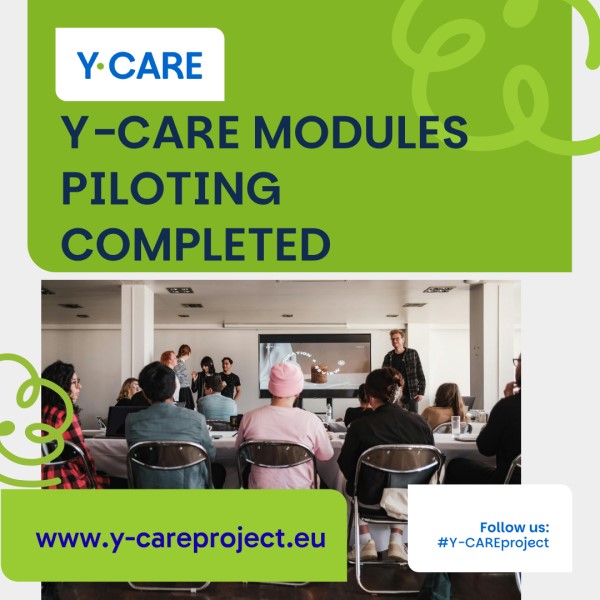
During the pilot phase, the project partners tested the newly developed training curriculum and the Y-CARE e-learning platform with youth workers, educators, trainers, and other professionals working with young people. The pilot activities were organised in different countries and delivered through a combination of face-to-face, online, and hybrid training sessions, ensuring flexibility and accessibility for diverse target groups.
Overall, more than 150 people, including participants and trainers, were involved in the pilot implementation. This broad engagement provided valuable feedback on both the learning materials and the digital platform, helping the partnership evaluate their relevance, usability, and practical impact.
The pilot focused on strengthening youth workers’ competences in key areas such as burnout prevention, emotional resilience, work-life balance, communication, peer support, and self-care. Interactive learning methods, including group discussions, practical exercises, case studies, and reflective activities, encouraged participants to connect the content with their everyday professional experience. Feedback showed that these experiential approaches were particularly effective in increasing engagement and supporting meaningful learning.
Participants also explored the Y-CARE e-learning platform, which offers access to training materials, practical tools, and self-paced learning resources. The platform received very positive feedback for its intuitive design and ease of use, while the pilot also identified several opportunities for further improvement, including additional language localisation and enhanced offline access to learning materials.
The results of the pilot confirmed that the Y-CARE training programme addresses an important need within the youth sector by providing practical strategies to improve well-being, prevent burnout, and promote sustainable working practices. The feedback collected during the pilot is now being used to finalise the curriculum and optimise the e-learning platform before its wider public release.
The successful completion of the pilot phase represents another significant step towards making high-quality, accessible training resources available to youth workers across Europe, helping them better support young people while also taking care of their own mental health and professional resilience.
